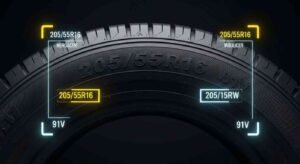
Tyre Codes Are Your First Safety Feature
Tyre codes aren’t boring technical junk. They’re life-saving instructions stamped on rubber. Once you understand them, you’ll never buy tires blindly again.
Every tyre carries critical data related to tyre certification, load distribution, and speed endurance, all of which directly impact safety, braking, and long-term durability.
Next time you shop for tyres—online or offline—read the codes first. Your car, your wallet, and your safety will thank you.
Why Tyre Codes Matter More Than You Think?
Ever looked at your tyre sidewall and felt like you were staring at a secret code meant only for engineers? You’re not alone.
Most drivers focus on tread depth or brand name and completely ignore tyre codes. Big mistake.
Those numbers and letters—like 205/55R16, DOT, 91V—are not random. They define:
- Safety limits
- Ride comfort
- Rolling resistance
- Fuel efficiency
- Heat handling ability
In hot regions, long highways, or heavy city traffic, tyre codes also influence aquaplaning resistance, wet grip rating, and heat durability.
Think of tyre codes like a medical report for your car’s shoes. Ignore it, and you might walk straight into trouble.
Let’s decode them step by step.
Where to Find Tyre Codes on a Tyre Sidewall?
Inside vs Outside Sidewall
Tyre information is printed on both sides, but here’s the catch:
The DOT code is usually printed only on one side—often the inner side facing the car.
So if you can’t find the DOT date, you may need to look behind the wheel.
Common Mistakes When Reading Tyre Markings
- Confusing tyre size with rim size
- Ignoring load & speed ratings
- Buying tyres based on looks, not specs
- Overlooking manufacturer recommended specs
Understanding Tyre Size Codes (Example: 205/55R16)
Let’s break this down like a recipe.
What Does “205” Mean?
This is the tyre width in millimeters.
So 205 means the tyre is 205 mm wide from sidewall to sidewall. Wider tyres increase grip by enlarging the contact patch, but also raise rolling resistance.
How Tyre Width Affects Grip & Fuel Economy?
- Wider tyre = better grip, sportier handling
- Narrower tyre = better fuel efficiency, lower noise
Too wide? You lose mileage.
Too narrow? You lose stability.
What Does “55” Aspect Ratio Mean?
This is the height of the sidewall, expressed as a percentage of tyre width.
55% of 205 mm = sidewall height
Comfort vs Handling Explained
- Higher ratio (60–70): More comfort, more sidewall flex
- Lower ratio (40–50): Sharper handling, stiffer ride
If tyres were shoes, low-profile tyres are sports sneakers, and high-profile tyres are cushioned walking shoes.
What Does “R” Stand For?
R = Radial construction
Almost all modern tyres are radial because they:
- Last longer
- Run cooler through better heat cycle management
- Reduce rolling resistance
Older types like bias-ply are nearly extinct.
What Does “16” Indicate?
This is the rim diameter in inches.
So R16 means the tyre fits 16-inch alloy or steel wheels.
Wrong rim size = tyre won’t fit. No compromise here.
How to Read Tyre Codes?
Full Form of DOT
DOT = Department of Transportation (USA)
It confirms compliance with safety standards and global tyre certification norms.
Where is the DOT Code Located?
Usually printed like this:
DOT X7 9M 3523
How to Read the DOT Manufacturing Date?
The last four digits matter most.
3523 = 35th week of 2023
Understanding Week & Year Format
- First two digits → Week
- Last two digits → Year
Why Does Tire Age Matters Even If Tread Looks New?
Rubber ages even when unused due to oxygen exposure and repeated heat cycles.
Ideal tyre age at purchase: less than 1 year old
Replace tyres after 5–6 years, even if tread remains
In hot climates, aging accelerates and affects speed, endurance and grip.
Tyre Load Index Explained
What Is a Load Index?
Load index shows how much weight one tyre can safely carry.
Example: 91 = 615 kg per tyre
This directly affects load distribution across suspension and braking systems.
Why Is Incorrect Load Index Dangerous?
- Tyre overheating
- Sidewall failure
- Blowouts at highway speed
Never downgrade load index to save money.
Speed Rating on Tyres – Letters That Save Lives
What Is a Speed Rating?
A letter indicating maximum safe speed and thermal resistance.
Examples:
- H = 210 km/h
- V = 240 km/h
- W = 270 km/h
- Y = 300 km/h
Even if you drive slow, higher ratings:
- Handle heat better
- Improve braking stability
- Increase speed endurance
Run-Flat & Reinforced Tyre Markings
Run-Flat Tyres Explained
Markings like:
- RFT
- SSR
- ROF
Allow limited driving after a puncture.
XL (Extra Load) Tyres Meaning
XL tyres operate at higher PSI / bar, improving strength for:
- SUVs
- Fully loaded cars
- Rough road conditions
Tubeless, Radial & Construction Markings
TL vs TT
- TL = Tubeless (modern standard)
- TT = Tube Type (older vehicles)
Radial tubeless tyres reduce rolling resistance and improve fuel economy.
Seasonal & Performance Markings
M+S (Mud & Snow)
Designed for mild winter conditions.
3PMSF Symbol
Three Peak Mountain Snowflake = certified winter tyre.
These standards also appear in EU tyre labeling, along with:
- Wet grip rating
- Tyre noise rating
Country of Manufacture & Plant Codes
Quality depends more on:
- Brand
- Manufacturing standards
- Freshness
Not just a country name.
OEM Markings & Car Manufacturer Codes
Examples:
- MO – Mercedes
- AO – Audi
- ★ – BMW
Non-OEM tyres are fine if all specs match.
Common Tyre Code Myths Debunked
“Bigger Tyres Are Always Better”
Wrong. Bigger can mean:
- Higher fuel consumption
- Steering issues
- Suspension stress
“New-Looking Tyres Are Safe Forever”
Rubber ages silently. Looks lie.
How to Choose the Right Tyre Using Codes?
- City driving → comfort-focused ratios
- Highway → higher speed ratings
- Hot climate → fresh DOT + strong load index
- Always follow manufacturer recommended specs
Real-Life Example – Full Tyre Code Breakdown
205/55R16 91V DOT 3523
- Width: 205 mm
- Aspect Ratio: 55
- Radial construction
- 16-inch rim
- Load: 615 kg
- Speed: 240 km/h
- Made: Week 35, 2023
Crystal clear, right?
FAQs
- How old is too old for a tyre?
Anything over 6 years should be avoided. - Can I change tyre size slightly?
Minor changes may work—always consult guidelines. - Is higher speed rating always better?
Yes, for safety and heat resistance. - What happens if load index is lower than required?
Higher failure risk under load. - Are DOT codes same worldwide?
Yes, DOT date format is globally standardized.