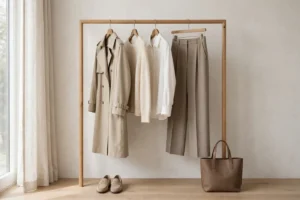
A capsule wardrobe is a small, carefully chosen collection of clothes that all work together, so getting dressed becomes easy instead of stressful. Instead of a wardrobe full of clothes you rarely wear, a capsule wardrobe holds perhaps thirty to forty pieces, including shoes and outerwear, that mix and match into dozens of outfits. The idea is not about owning very little for its own sake. It is about owning clothes you love, that fit well, and that suit your actual life. This guide covers how to build a capsule wardrobe step by step, whatever your style or budget.
Start by Clearing and Auditing What You Own
Before buying anything, look honestly at what you already own. Take everything out of your wardrobe, or at least go through it section by section, and sort each item into three groups: love and wear regularly, sometimes wear, and rarely or never wear. The first group is the foundation of your capsule. The second group needs a decision: keep only what genuinely fits and suits you. The third group should leave the wardrobe, whether donated, sold, or recycled.
Notice patterns as you sort. Most people discover they wear a small fraction of their clothes most of the time, and that their favourite pieces share colours, fits, or styles. Those patterns are your personal style, and they should guide everything you keep and buy next. A capsule wardrobe built around your real preferences lasts far longer than one copied from someone else’s list, because it reflects how you actually live and dress.
Choose a Colour Palette and Core Pieces
A capsule wardrobe works because its pieces coordinate, and coordination starts with colour. Choose a palette of two or three neutrals, such as black, white, navy, grey, or camel, plus one or two accent colours you enjoy wearing. Neutrals form the backbone, because they pair with everything, while accents add personality without breaking the system. When every piece shares the palette, almost any combination looks intentional.
Build around core pieces that suit your daily life: well-fitting trousers or jeans, a few quality tops, a versatile jacket, comfortable shoes, and one or two items for smarter occasions. Quality matters more than quantity here, because capsule pieces are worn often and must last. Seasonal trends can inspire, but they should not drive the wardrobe: fall fashion trends from New York Fashion Week are fun to watch, yet only the trends that fit your palette and lifestyle deserve a place in your capsule. For colour confidence, how to wear brown stylishly shows how a single neutral can anchor many outfits.
Build Outfits, Not Collections
The test of a capsule wardrobe is not how it looks on a rail, but how many outfits it creates. Before finalising your capsule, lay out pieces and count combinations: each top should pair with at least three bottoms, and each outfit should work with your usual shoes and outerwear. Gaps become obvious quickly, such as owning many tops but only one pair of trousers, and filling a genuine gap is far better than buying another version of something you already own.
Accessories deserve the same thought, because they change an outfit without adding bulk. A good bag, a watch, and a few simple jewellery pieces or scarves multiply your options, and outdoor clothing brands remind us that practical pieces, chosen well, can be stylish too. Even everyday technology can be part of the capsule: the best smartwatches for fitness shows how one well-chosen accessory serves both style and function. A capsule wardrobe is ultimately a mindset: fewer, better things, chosen deliberately, worn often, and loved for a long time.
Maintain and Refresh Seasonally
A capsule wardrobe is not fixed forever. Review it each season, removing pieces that no longer fit, suit, or serve you, and adding only what fills a genuine gap. Store out-of-season pieces separately, so the current wardrobe stays visible and manageable. When you shop, use a list based on gaps, not impulse, and wait a day before buying anything unplanned. Most impulse purchases are the ones that end up unworn, and a waiting rule prevents most of them.
Be patient with the process, especially at the start. Your first capsule will not be perfect, and that is fine: you will learn what you actually reach for, what you miss, and what you never needed. Over two or three seasons, the wardrobe sharpens into something that feels effortless, because it was built around you. Getting dressed stops being a daily dilemma and becomes a small daily pleasure, which is exactly what a capsule wardrobe promises: less clutter, less stress, and more confidence in what you wear.
Capsule Wardrobes for Different Lifestyles
A capsule wardrobe looks different for everyone, because it must fit a real life, not an ideal one. An office worker needs smart pieces that work five days a week, with a few relaxed items for weekends. A parent needs durable, washable clothes that move easily and survive daily life. Someone who works from home may need only a few smart pieces for video calls, plus comfortable everyday clothes. Start from your actual week, not from a generic list, and count how many days you spend in each kind of clothing. That count tells you where your capsule should be heaviest.
Climate matters too. A capsule for a mild climate can be smaller than one for a place with four distinct seasons, where you may need two seasonal capsules rather than one year-round set. Travel also shapes a capsule: frequent travellers benefit from wrinkle-resistant fabrics and pieces that layer well. The principle stays the same in every case: fewer pieces, chosen for your life, in colours that coordinate, with each piece earning its place by being worn often and loved genuinely.
Common Mistakes to Avoid
The most common capsule wardrobe mistake is buying a whole new wardrobe at once, usually from someone else’s list, without considering your own style or life. The result is a wardrobe that looks good in photographs but feels wrong to wear, and it rarely lasts. Build gradually instead, starting from what you already own and love, and adding only pieces that fill genuine gaps. A second mistake is choosing style over comfort: a beautiful item you never wear because it pinches, itches, or restricts movement is not a capsule piece, whatever it cost.
A third mistake is ignoring maintenance. Capsule pieces are worn often, so they need proper care: washing as directed, repairing small damage promptly, and storing out-of-season items well. A well-cared-for capsule lasts years and looks better over time, while a neglected one falls apart quickly. Finally, do not treat the capsule as a rigid rule. If your life changes, your wardrobe should change with it, and adding or removing a piece is not failure. A capsule wardrobe is a tool for easier mornings and greater confidence, not a test to pass, and the best capsule is the one that quietly serves your life every day.