Padel is the racket sport that seems to appear from nowhere and then, suddenly, it is everywhere. Friends book courts, clubs open waiting lists, and you keep hearing that it is easier than tennis and more social than squash. This guide to padel for beginners covers what you actually need for your first game: the basic rules, the gear that matters, and the habits that make new players improve fast.
The short version is encouraging. If you can rally a ball over a net, you can play a decent game of padel on your first day, and you will probably be laughing within ten minutes.
What Is Padel, in Plain Words
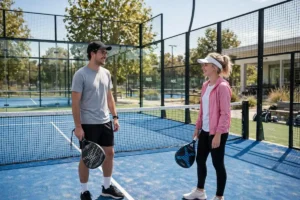
Padel is played in doubles on a court about a third smaller than a tennis court, surrounded by glass and mesh walls. The walls are part of the game, so the ball can bounce off the glass and still be in play. That one difference makes rallies longer and puts clever placement ahead of raw power.
The racket is solid, with no strings, and the ball is similar to a tennis ball with slightly less pressure. Scoring follows tennis, which helps anyone who has watched a few matches. Most beginners find the underarm serve and the forgiving walls make the first session far less frustrating than their first try at tennis.
The Basic Rules You Need for Game One
Serve underarm, below waist height, and bounce the ball once before you hit it. The serve must land in the diagonal service box, and you get two attempts, just like tennis. After the serve, the ball can be volleyed, played after one bounce, or played after it rebounds off the glass on your own side.
A few details catch newcomers out. You lose the point if the ball bounces twice, if you hit it into the net, or if it flies out of the court without bouncing first. You also lose the point if the ball hits the mesh fence on your side directly, although playing it off your own glass is legal and quickly becomes your favourite defensive trick.
Games and sets follow the tennis system, and most social matches are played as the best of three sets or simply for a booked hour. Ask your group before you start, because clubs vary in how they organise friendly games.
Gear: Racket, Shoes and Balls
Beginner rackets are round, light and forgiving, and they cost far less than the diamond shaped models aimed at advanced players. Borrow or hire a racket for your first two or three sessions if you can. Once you know you enjoy the game, a round racket with a soft core will serve you well for your first year.
Shoes matter more than most beginners expect. Court shoes with a herringbone or omni sole grip the artificial turf without wrecking your knees when you turn. Running shoes are a poor substitute, because their tall, soft soles can roll when you move sideways. Clothing is simple: anything you would wear for a gym session works, and our guide to building a capsule wardrobe shows how a few versatile pieces can cover sport and everyday life without an overflowing closet.
Padel balls are sold in pressurised tubes and lose their bounce faster than tennis balls. A fresh tube every few sessions keeps the game lively, and most clubs sell them at reception if you forget yours.
Skills to Practise in Your First Month
Start with the wall. Stand close to the back glass, let the ball pass you, bounce off the glass and come back, then play your shot. This single skill, called playing off the glass, is what separates padel from tennis, and ten relaxed minutes of practice will save you dozens of points in matches.
Next, learn to love the lob. When opponents crowd the net, a high, deep lob pushes them back and gives your pair time to move forward. Finally, work on simply keeping the ball in play. Beginners lose far more points through their own errors than through winners from the other side, and a fitness smartwatch can quietly confirm what your legs already know, that a social hour of padel is a serious workout.
A Real Example: Four Friends, One Saturday Court
Consider a typical first booking. Four colleagues hire a court for ninety minutes on a Saturday morning, none of them having played before. The first fifteen minutes are chaos, with serves into the net and balls rebounding off the glass in directions nobody predicted.
By the second set, patterns emerge. The pair that wins most points is not the strongest, it is the pair that talks, calling mine and yours before every ball, and lobs whenever they are pushed back. They finish tired, slightly addicted, and already arguing about which evening to book next. That arc, from confusion to competition in one session, is exactly why the sport keeps growing.
Common Beginner Mistakes
The most common mistake is standing too close to the net or too far back and never moving between the two. Padel is a game of positions, and you will spend much of it walking forward and back as a pair. The second mistake is swinging at everything at full power. The walls reward patience, and a soft, well placed shot beats a wild smash in most rallies.
The third mistake is treating the glass as an enemy. New players flinch when the ball comes off the back wall, but stepping aside and letting it rebound gives you more time, not less. Give it three sessions and the glass will start to feel like a fifth player on your side.
Finding Courts and Partners
Padel is a doubles game, so your first practical task is finding three other people and a court. Most clubs run beginner social sessions where staff match players of a similar level, and these are the easiest way in if your friends are not yet converted. Turn up once, and you will usually leave with two new contacts and a standing game.
Booking ahead matters in busy cities, where evening courts go first. Off peak daytime slots are cheaper and quieter, which suits beginners who want rallies without an audience. Many clubs also lend rackets at reception, so your first month can cost little more than the court fee split four ways. Once a regular group forms, the game stops being an occasional treat and becomes the fixed point in the week that everyone plans around.
Time to Pick Up a Racket
Padel travels well, too. Spain is its heartland, and many players plan holidays around a few matches in the sun, so it pairs naturally with the money saving advice in our guide to finding cheap flights. Winter players at home can mix court time with trips from our list of places to visit in the United Kingdom in winter, and after a match, knowing how much to tip at a restaurant keeps the post game lunch as smooth as your new lob.
Book one court, borrow one racket, and bring three friends. Padel for beginners is not about being good on day one. It is about discovering a sport that makes exercise feel like a social plan, and that is a habit worth keeping.