Buyers decide how they feel about a home within seconds of walking through the door — and most of that decision is not about the house itself. It is about light, space, smell and whether they can imagine their own life unfolding in the rooms. Learning how to stage a home for sale means arranging those first impressions on purpose. You do not need to hire a professional stager or buy new furniture. You need to remove friction, highlight the space you are actually selling, and let buyers do the imagining.
This room-by-room guide covers the staging steps that make the biggest difference, in the order a buyer experiences them: the street, the entrance, and then each main room.
Start Outside: The Viewing Begins at the Kerb
Long before the front door opens, buyers have judged the garden path, the door, and the windows. Sweep the path, clear weeds from the edges, wash the front door and polish its handle and letterbox — small details that quietly signal a cared-for home. If the door paint is tired, a fresh coat in a classic colour is one of the cheapest upgrades in all of staging.
Put bins out of sight, park cars so the house itself is visible, and add one welcoming touch near the entrance: a healthy potted plant or a clean new doormat. In the evening, check that the porch light works; many viewings happen after work, and a lit entrance feels safe and warm.
Declutter Like You Are Already Moving
Staging rule one: you are selling space, not belongings. Every surface should hold a fraction of what it usually does. Pack away family photos, collections, fridge magnets, bathroom products and the small appliances crowding the kitchen counters. This is not wasted effort — you are moving anyway, so think of it as packing early, starting with the things that make rooms feel smaller. It is also the right moment to line up the practical side of the move itself; our checklist for choosing a moving company will save you stress later.
Furniture needs the same honesty. A room with one piece too many reads as a small room; the same room with breathing space reads as generous. Move oversized or extra pieces into storage, a garage, or a friend’s spare room — if you need rented space, our guide to choosing a storage unit covers sizes, security and the contract checks that matter. Pull remaining furniture slightly away from the walls and arrange it to show how the room is used — a reading chair angled toward the light, not a row of seats pushed against the skirting like a waiting room.
Clean, Fix and Neutralise
A staged home must be cleaner than a lived-in home. Buyers open cupboards and look in corners, and they read grime as neglect of bigger things. Deep-clean the kitchen and bathroom until they shine, wash windows inside and out, and deal with smells at the source rather than masking them — an open window beats a scented candle every time.
Then fix the small stuff you have stopped noticing: the dripping tap, the stiff door, the cracked socket cover, the scuffed skirting. Each one is trivial; together they tell buyers the house has been maintained. Finally, neutralise strong personal style. You do not need to paint everything white, but bold feature walls and very personal decor narrow the audience. Soft, light, neutral tones photograph well and make rooms feel larger.
Room by Room: Where to Spend Your Effort
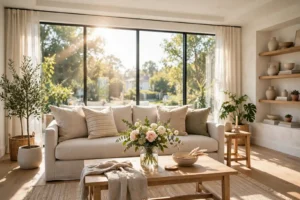
Living room. Define one clear purpose for the space. Arrange seating around a focal point — a fireplace, a window, a coffee table — add cushions and one throw for texture, and make sure the main walkways are obvious and unobstructed. A plant in a dead corner and warm lamplight in the evening complete the effect.
Kitchen. Clear the counters to almost nothing: one fruit bowl or a cookbook on a stand is enough. Clean inside the oven and microwave (buyers check), polish taps and handles, and set the table simply if there is a dining area — it helps buyers picture meals there without a full formal setup.
Bedrooms. Make the bed like a hotel: white or neutral bedding, pillows plumped, a folded throw across the foot. Clear bedside tables to a lamp and one book. In children’s rooms, contain toys in a few tidy boxes; buyers with no children need to see a room that could be an office or guest room.
Bathroom. This room sells cleanliness. Remove every bottle from view except one or two attractive ones, hang fresh matching towels, replace a tired shower curtain, and check the grout — re-whitening it is an afternoon’s work that transforms the room. A small plant or a rolled hand towel adds the spa note buyers respond to.
Hallway and spare rooms. Hallways should be empty and bright; they set the pace for the whole viewing. Spare rooms must have a defined identity — a guest bed or a desk and chair — because an undefined room full of boxes reads as a storage problem, not a bonus room.
Light, Air and the Final Ten Minutes
Light sells homes. Open every curtain and blind before a viewing, clean the glass, and replace any dim or mismatched bulbs so the whole house shares one warm, bright tone. Open windows for twenty minutes beforehand to clear cooking or pet smells, then close them if the street is noisy.
In the final ten minutes before viewers arrive, do a photographer’s pass: look at each room from the doorway and remove anything your eye lands on that is not helping — shoes, cables, pet beds, laundry. Put the toilet lids down, straighten cushions, turn on the lamps. Then leave if you can; buyers relax, linger and imagine honestly when the owner is not hovering.
What Staging Cannot Fix — and Why It Still Works
Staging will not hide a busy road, add a bedroom, or repair a roof, and it should never be used to disguise real problems. What it does is remove every avoidable reason for a buyer to hesitate, so the home’s genuine strengths — its light, its layout, its location — get a fair hearing. Reading our first-time home buyer guide is a useful exercise here: it shows exactly what buyers are checking, saving for and worrying about while they walk through your rooms. In a market where most buyers first meet your home as photographs on a screen, that fair hearing starts even earlier: staged, decluttered rooms photograph bigger and brighter, and better photographs are what book the viewings in the first place.
Work through the house in the order buyers will: street, door, hall, living spaces, kitchen, bedrooms, bathroom. Declutter hard, clean harder, fix the small things, and keep it neutral and bright. Stage a home for sale this way and you are not decorating — you are giving buyers the space to fall for it.
Keep Reading
If you found this useful, these related guides from our team go deeper on nearby topics: